The Strawberry That Tasted Like a Strawberry
Share
I ate a strawberry in France that felt like therapy. It wasn’t dipped in anything or cooked in some fancy way. It was just a strawberry. A strawberry that tasted like a strawberry.
It was one of those allegory of the cave moments where you experience truth in a way that shakes you. It wasn’t me. I didn’t make it up. I’ve been gaslit.
American strawberries really are not as good. I’d let them convince me otherwise. This strawberry didn’t boast the largest leaves, or have a bottom with seven different lumps. It was just a strawberry. What else have I been blind to?
I travelled home feeling sad, as one does going back to reality after a week of gorging on fresh bread and red wine.
In my state of post-Paris depression, I decided I had to know. One, where the products I was using came from and two, why something grown locally might taste completely different than the same thing grown elsewhere.
Then I remembered the Groupon cheese tasting experience I had booked with my friends. A skinny dude in his kitchen with his cat explained, albeit beautifully, why milk from different locations could be so dissimilar. This is where I learned of Terroir.
Something so prevalent in the wine industry, but that hides behind brands in the fragrance industry, especially in the States. American consumers typically choose a product based on heritage and prestige, rather than what’s inside it. As long as the product is big, loud, and overstated then it’s worth the price. Right?
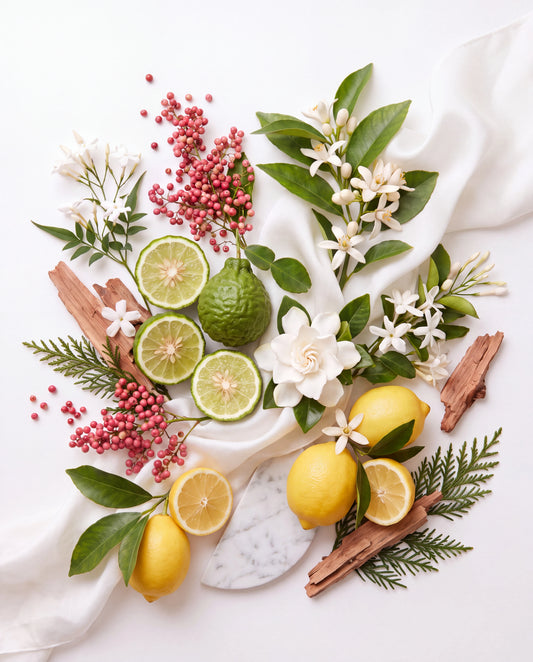
We turn our noses up at a Bordeaux without knowing the region, yet have been wearing chypres, drinking Earl Grey, and spraying fragrance in our homes without knowing where the bergamot comes from. If you don’t understand why the bergamot sourced from Calabria, Italy, smells the way it does, how can you make an educated purchase?
You cannot.
This is why I want to tell you.